
Catherine Helen Spence
Catherine Helen Spence was a pioneer of Australian democracy. It's time she had a monument to match her legacy.
Catherine's Early Life
Catherine Helen Spence was the fifth of eight children born to David and Helen Spence in 1825 near Melrose, Scotland. In a family that valued education and intellectual independence, Catherine was surrounded by strong, educated women and learned early on the value of women’s contributions both within and beyond the home. Her parents were educated supporters of Scotland’s Reform movement.
When Catherine was fourteen, her father’s financial difficulties forced the family to emigrate to the newly established colony of South Australia, arriving in Adelaide in 1839. Many settlers imagined South Australia as a place where a new, more progressive society could be built, and Catherine grew up believing strongly in its possibilities.
Catherine had always hoped to become a teacher or writer. At seventeen, she took her first job as a governess and, three years later, opened her own school. Although the school did not last long, she continued her own education through independent study and public engagement.
In 1854, she published Clara Morison: A Tale of South Australia During the Gold Fever, the first novel about Australia written by a woman. She went on to publish several more novels, but journalism and public commentary increasingly became her principal means of engaging with the world around her.
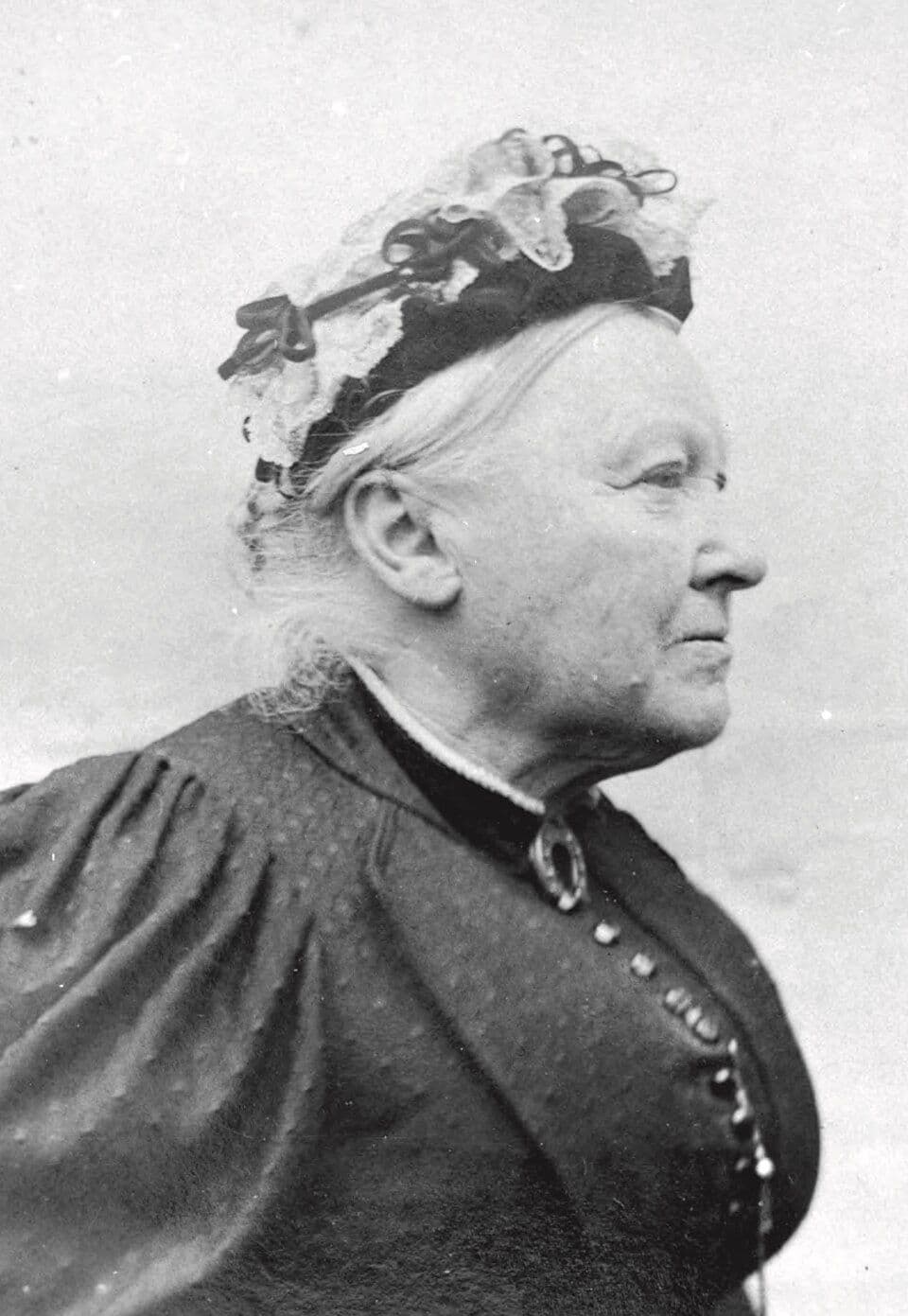
Political Life in Australia
Catherine Helen Spence’s political life grew out of a commitment to social reform. She campaigned for better education, including secondary education for girls, and in 1872 helped Caroline Emily Clark establish the Boarding-Out Society, which placed orphaned and destitute children in family homes rather than institutions. She later served on the State Children’s Council and the Destitute Board, and wrote The Laws We Live Under, the first social studies textbook used in Australian schools.
For much of Catherine’s life, women were excluded from formal political power. They could not vote or stand for parliament in South Australia, and the political system offered little opportunity for women to help shape the decisions that affected their lives. Catherine became involved in the women’s suffrage movement, joining the Women’s Suffrage League in 1891 and later becoming a vice-president. She supported the campaign that culminated in South Australia becoming the first place in the world to give women the right to vote and stand for parliament in 1894. After returning from an international speaking tour, including the Women’s Suffrage Congress in Washington, DC, she was present in Parliament to support the Adult Suffrage Bill.
For Catherine, democracy was about more than electing a government; it was about ensuring that ordinary people, including women and minority groups, had a meaningful voice in public life. Her campaign for electoral reform grew from this belief that Australia’s political system should represent the people it claimed to serve.
Hare-Spence and Proportional Representation
In 1859, Catherine Helen Spence encountered British lawyer Thomas Hare’s proposals for electoral reform and was captivated by the idea of proportional representation. Hare’s system was designed to give minority groups a voice in parliament, rather than allowing their votes to be swallowed up by winner-takes-all elections. Catherine later wrote that electoral reform became “the foremost object of my life”. In 1861, she published A Plea for Pure Democracy, adapting Hare’s ideas for South Australia and outlining what she would eventually call “effective voting”. Her proposal used larger, multi-member electorates to give different sections of political opinion a better chance of being represented.
The pamphlet attracted little support at the time, and Catherine turned her attention to writing and other areas of social reform. But she never abandoned the idea. By the 1890s, as Federation gathered momentum, she returned to electoral reform with renewed determination. She refined Hare’s system for the Australian context, arguing that proportional representation could give underrepresented groups a stronger voice and protect independent political thought from increasingly powerful party organisations. She took her ideas to public meetings across South Australia and overseas, including the 1893 Chicago World’s Fair, and formed the Effective Voting League in 1895. During this period, she also travelled to the UK, where she met Thomas Hare and continued to advocate for proportional representation.
In 1897, Spence stood for election to the Federal Convention, which was responsible for drafting the Australian Constitution. Her candidacy was unsuccessful, but it made her the first woman in Australia to stand for political office. She used the campaign to bring electoral reform onto the national political agenda, receiving 7,500 votes and finishing twenty-second of thirty-three candidates. For Catherine, standing for election was about more than winning a seat: it was another opportunity to argue for a political system that gave more Australians a meaningful voice.
Catherine’s ideas also influenced Tasmanian politician and constitutional thinker Andrew Inglis Clark. Clark adapted her approach for Tasmania’s multi-member electorates, changing how the quota was calculated and how preferences were distributed. His Electoral Act 1896 introduced the system in Tasmania, where it became known as the Hare-Clark system, while Spence’s version was known as the Hare-Spence system, or “effective voting”. Her contribution was recognised at the time: Tasmanian statistician R. M. Johnston wrote in 1897 that it was “to Miss Spence’s unwearied advocacy, by word and pen, the success of the introduction of the Hare System in Tasmania by Mr. Clark is largely due.” Although the system that developed in Tasmania was the result of contributions from several people, Spence had spent decades bringing proportional representation into Australian political debate and advocating for a democracy in which a wider range of voices could be heard.